


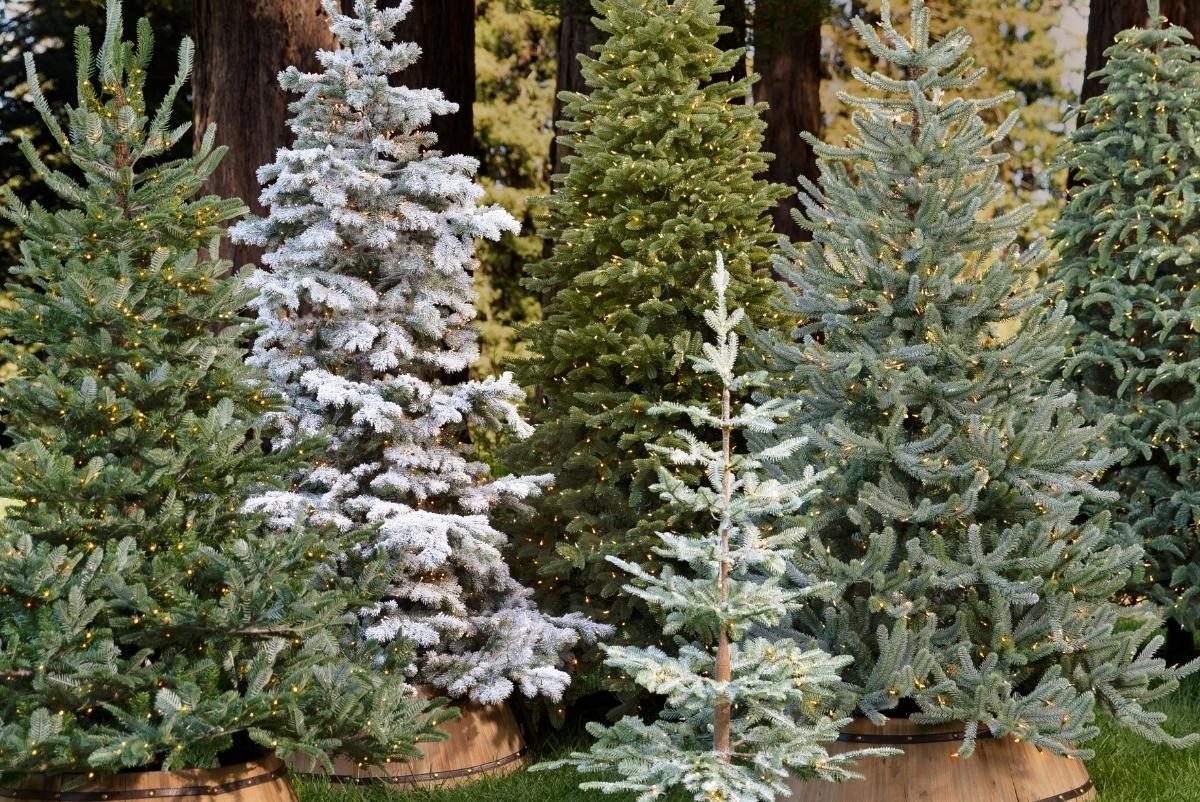
With so many types of Christmas trees out there, it can be difficult to tell the variations of common evergreen trees apart. Comparing spruce, fir, and pine trees can be a bit confusing at times. And even if you know their differences, which one is the right type of Christmas tree for your home? Let’s answer some common questions in this post.
What’s the Difference Between a Pine Tree vs Evergreen?
There’s no difference between a pine tree and an evergreen. This is because a pine tree is a type of evergreen tree. Moreover, evergreens have green foliage all year round. Thus, they do not shed needles as much as deciduous plants that completely lose their leaves during fall.
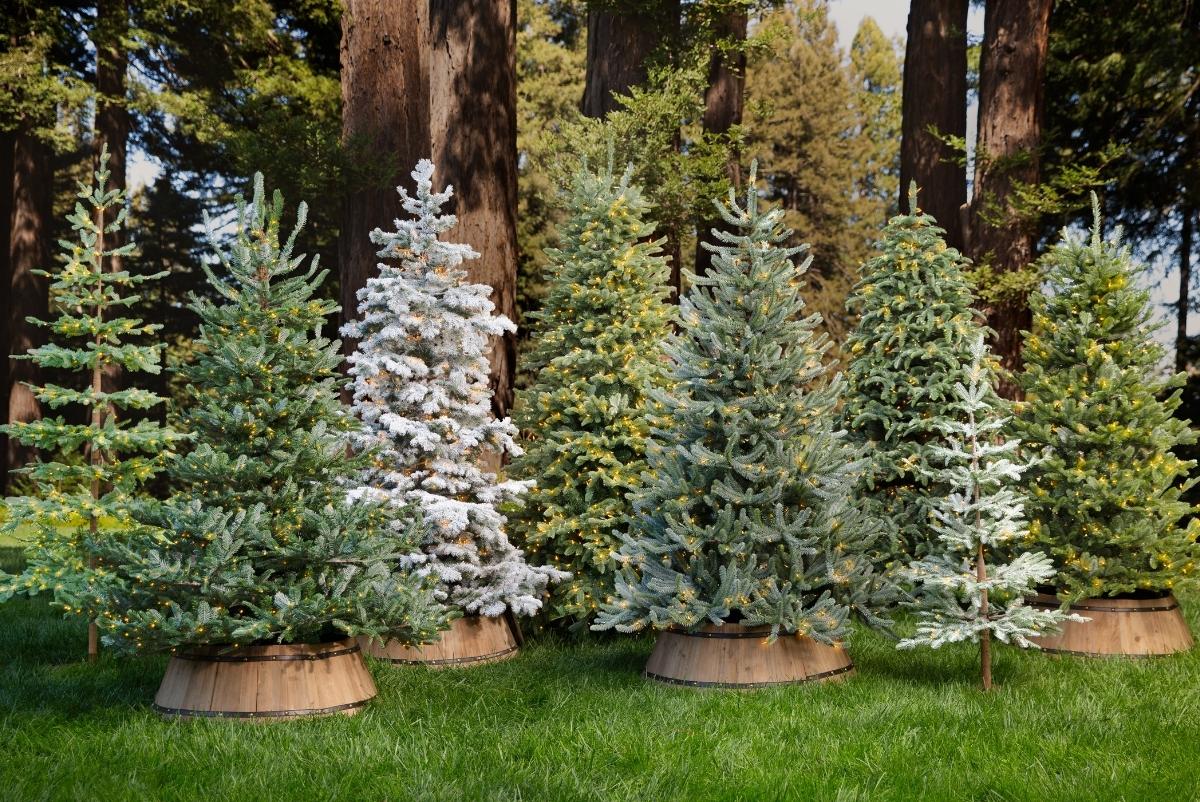
Featured: Alpine Balsam Fir® Tree | European Fir® Tree | Frosted Yukon Spruce® | BH Fraser Fir® Flip Tree® | Sanibel Spruce® Tree | BH Noble Fir® | Frosted Alpine Balsam Fir® Tree | BH Nordmann Fir®
What’s the Difference Between Spruce vs Pine vs Fir Types of Christmas trees?
The three most popular types of Christmas trees are fir, spruce, and pine. All of these are coniferous evergreens that feature close-set needles. However, each has its own characteristics that sets it apart from the others.
How can you tell the difference between these types of evergreen trees? Here are a few of the things to look for when comparing the three variants.
Fir Trees
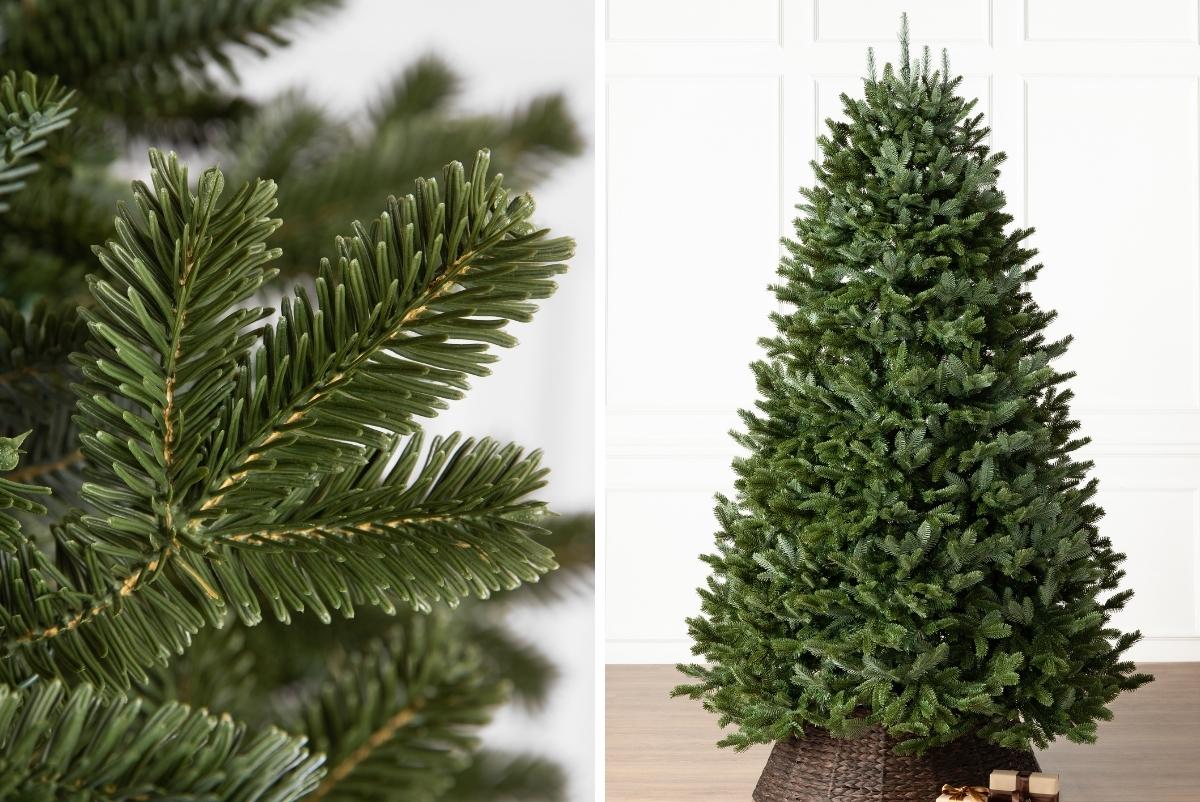
Featured: Balsam Hill BH Fraser Fir Christmas Tree
Fir trees have individual flat needles that grow directly off of their smallest stem-like branches. In addition, fir needles grow in a spiral up to the tip of each branch. This gives the tree a robust, lush appearance. Like our BH Fraser Fir, the tree’s silhouette is bushy and full. Thus, it allows little room to hang ornaments. A fir tree is beautiful on its own and is the perfect choice if you prefer a less-decorated tree.
Spruce Trees
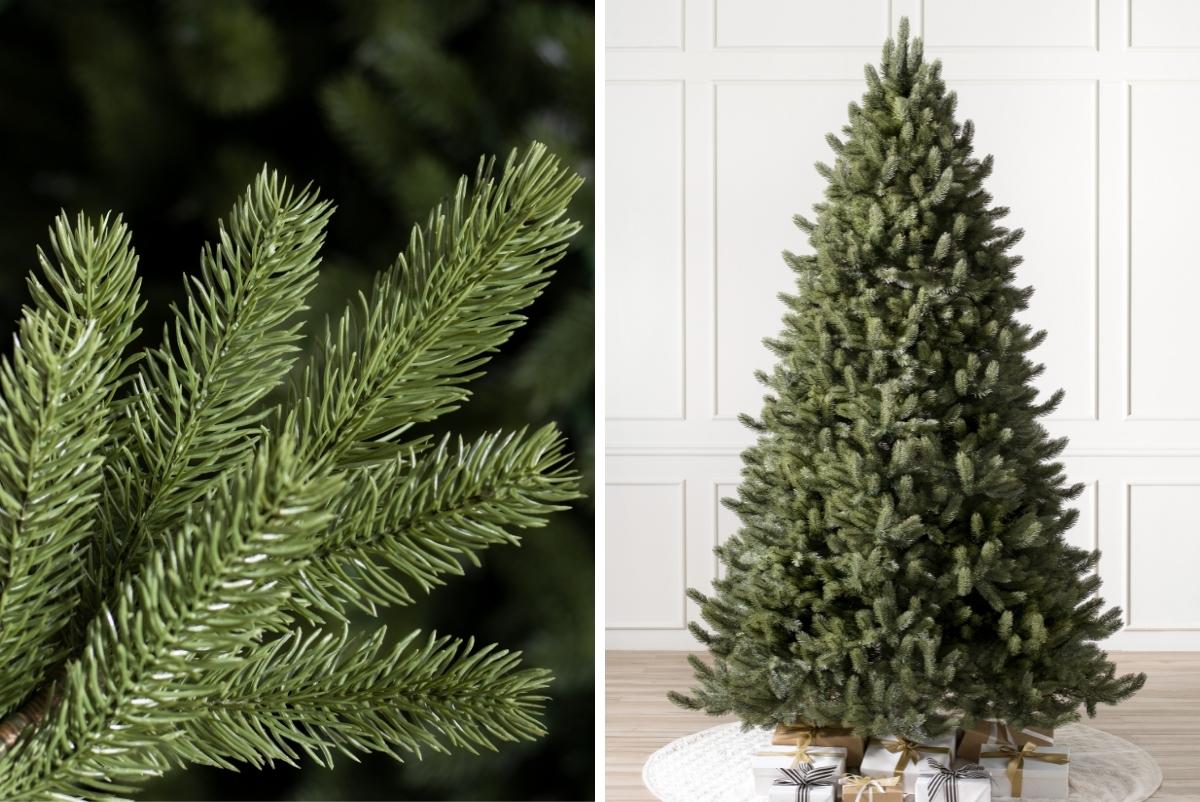
Featured: Balsam Hill Vermont White Spruce® Christmas Tree
Similar to fir trees, spruce trees have single needles connected to their stems. Their needles are sharp, square-shaped, and break easily if you bend them. In addition, this tree has the traditional full Christmas tree shape. It also has upturned branches, much like our Vermont White Spruce tree. This allows you to display more decorations than firs.
Pine Trees
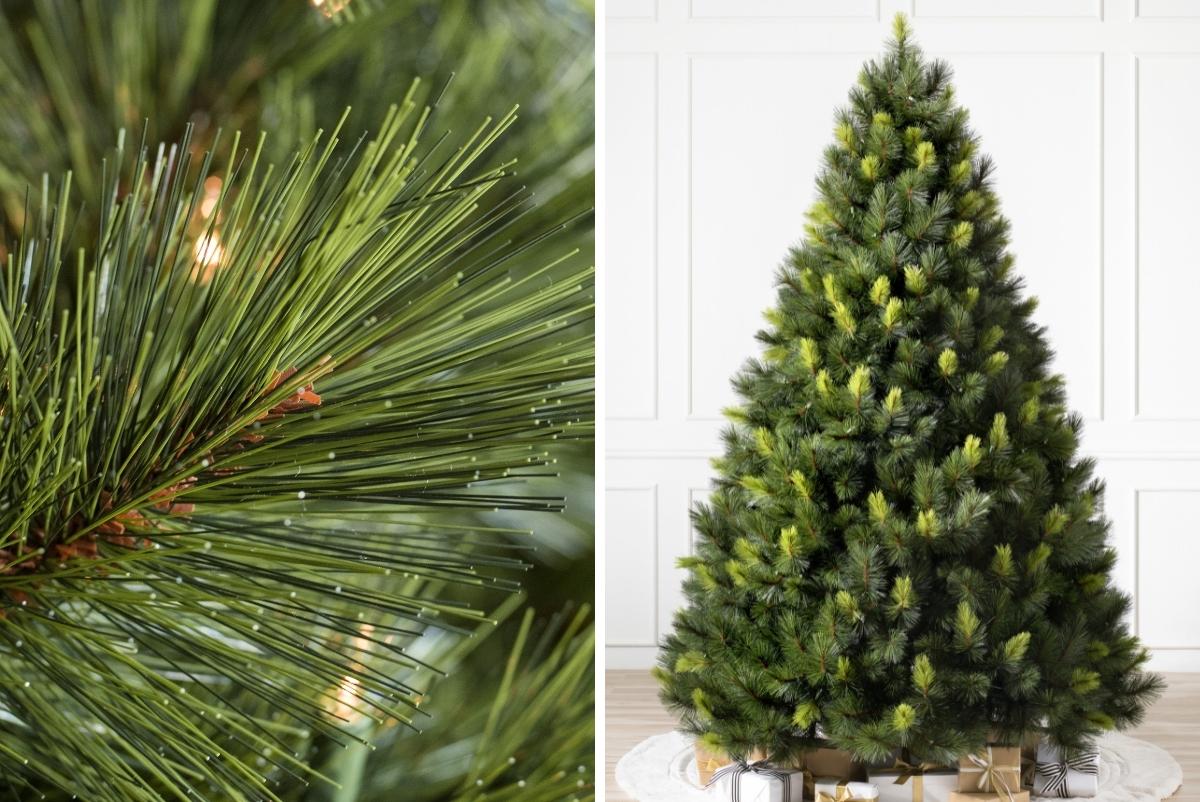
Featured: Balsam Hill Scotch Pine Christmas Tree
Compared to fir and spruce trees that have individual needles, pine trees have needles that grow in bundles. You can typically see three to five needles bunched together on an upturned pine tree branch. However, since pine trees have fewer branches, they tend to look a bit more sparse than firs or spruces. For this reason, their widely spaced branches allow you to display ornaments prominently. Our Scotch Pine tree is a perfect example of this tree silhouette.
In summary, here’s how to differentiate between spruce, pine, and fir:
| Fir | Spruce | Pine |
| • Individual flat needles • Bushy and full silhouette • Ideal for minimal decorations | • Sharp, square-shaped individual needles • Upturned branches • Traditional full Christmas tree shape • Can hold more decorations than fir trees | • Needles grow in bundles • Full profile with widely-spaced branches • Provides more room for ornaments |
We hope this post helps you choose the right type of Christmas tree for your holiday centerpiece.
Find the Best Christmas Tree
Comparing Christmas tree options? Read these next to help you find the best one for your needs.
- Ask Mac: Which Balsam Hill® Tree Should I Get?
- A Review of Big-Box Store vs. Balsam Hill Christmas Trees
- Real vs Artificial Christmas Trees: Are Balsam Hill Trees the Better Choice?
- Balsam Hill Store: Where to Experience the Most Realistic Christmas Trees
After you’ve chosen the right type of Christmas tree for your home, it’s time to prepare to decorate. Sign up for Balsam Hill’s newsletter to get information on our decorating guides, new products, and special offers straight to your mailbox.


Comments are closed.